
EA888 Gen 1 Audi EA888 Gen 1
Модульний 4-циліндровий двигун з TwinPower Turbo, відомий своєю ефективністю та можливістю тюнінгу.
73
Brand engines
2
Modifications

Technical Specifications
| Engine Displacement | 2.0 L (1,984 cc) |
| Configuration | Inline-4 |
| Number of Cylinders | 4 |
| Valves per Cylinder | 4 |
| Power | 160 - 211 л.с. |
| Torque | 250 - 280 Н*м |
| Cylinder Bore | 82.50 mm |
| Piston Stroke | 92.80 mm |
| Compression Ratio | 9.6:1 |
| Firing Order | 1-3-4-2 |
| Fuel System | Direct Injection |
| Aspiration | Turbocharged |
| Turbocharger | K03 |
| Intercooler | Yes |
| Maximum RPM | 6,000 rpm |
| Max Torque RPM | 1,500 rpm |
| Valve Train | DOHC |
| Timing Drive | Chain |
| Timing Chain Replacement | 200000 or as needed |
| Block Material | Cast Iron |
| Head Material | Aluminum |
| Engine Weight | 148 kg |
| Dimensions (L×W×H) | 580 × 640 × 690 mm |
| Lubrication System | Pressure lubrication with oil cooler |
| Cooling System | Liquid cooling |
Additional Information
| Engine Family | Volkswagen Group EA888 |
| Manufacturing Plant | Győr, Hungary |
| Predecessor | EA113 |
| Successor | EA888 Gen 2 |
Maintenance
| Engine Oil Capacity | 4.6 L (with filter: 4.8 L) |
| Recommended Viscosity | 5W-30 |
| Oil Standard | VW 504 00/507 00 |
| Recommended Brands | Castrol Edge, Mobil 1, Liqui Moly |
| Oil Change Interval | 15 000 km or 12 mo |
| Oil Filter | 06D115562 |
| Air Filter |
06J133843
Replace every 60 000 km |
| Fuel filter | 1K0201051K |
| Cabin Filter | 1K1819653B |
| Spark Plugs |
Type: Iridium Part number: 06H905601AGap: 0.8 mm Quantity: 4 pcs Replace every 60 000 km |
| Coolant Capacity | 8 L |
| Coolant Type | G12++ (Audi Coolant) |
| Coolant Change Interval | 240 000 km |
| Thermostat Opening Temperature | 87°C |
| Operating Temperature | 90°C |
| Max Operating Temperature | 110°C |
| Critical Temperature | 125°C |
| Annual Maintenance Cost | 700-1000 USD |
Reliability
Expected lifespan: 250 000 km
Common problems
| Problem | Severity | Mileage | Repair cost |
|---|---|---|---|
| Oil consumption issues | Medium | 50000-100000 km | $500-1500 |
| PCV valve failure | Low | 60000-120000 km | $200-400 |
Known defects
- High oil consumption in early models
- Timing chain tensioner issues
Warranty extensions
- Extended warranty for oil consumption issues in some markets
Tuning potential
Tuning potential: Medium | Max. safe power: 350 hp
| Stage | Power | Torque | Method | Cost |
|---|---|---|---|---|
| Stage 1 | 240 hp | 350 Nm |
ECU remap only Reliability impact: Minimal |
$600 |
| Stage 2 | 280 hp | 400 Nm |
ECU, Downpipe, Intake Required: Upgraded intercooler, Downpipe, ECU remap Reliability impact: Low |
$2000 |
| Stage 3 | 320 hp | 450 Nm |
Hybrid Turbo, Injectors Required: Bigger turbo, Forged internals, Upgraded fuel system Reliability impact: Medium |
$8000 |
Popular modifications
- Cold air intake
- Performance exhaust
- High-flow catalytic converter
Tuning limitations
- Stock internals limit power increase
- Cooling system needs upgrades for track use
Cars with the EA888 Gen 1 engine
This engine was fitted to 1 model
| Photo | Brand | Model | Generation | Production years |
|---|---|---|---|---|
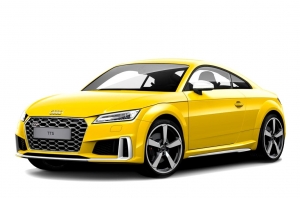
|
Audi | TTS | TTS | 2008 - 2014 |
All modifications (2)
| Vehicle | Generation | Modification | Power | Gearbox | Drive |
|---|---|---|---|---|---|
| Audi TTS | TTS | 2.0 TFSI 250 л.с. 6-МКП 4x4 | 250 hp | 6-МКП | 4x4 |
| Audi TTS | TTS | 2.0 TFSI 250 л.с. 7 S-tronic 4x4 | 250 hp | 7 S-tronic | 4x4 |
Interesting Facts
- First generation of the EA888 series
- Introduced with Audi's new modular engine design
Applications
Total produced: 500000
| Vehicle | Generation | Years | Power | Markets |
|---|---|---|---|---|
| Audi A4 | B8 | 2008-2012 | 160hp/211hp | Europe, USA |
| Volkswagen Passat | B6 | 2008-2010 | 160hp/211hp | Europe |
Compatible transmissions: 6-speed Manual, 7-speed DSG
Drive types: FWD, AWD
Fuel Economy
| Fuel Type | Petrol 95 |
| Octane Rating | Minimum: 95 | Recommended: 98 |
| Consumption (City) | 10.5 L/100km |
| Consumption (Highway) | 6.5 L/100km |
| Consumption (Combined) | 8 L/100km |
| Real Consumption | 9 L/100km |
| Fuel Tank Capacity | 55 L |
| Range | 688 km |
| Cost per 100 km | 15-18 USD |
Emissions Standards
| Emission Standard | Euro 5 |
| CO₂ Emissions | 189 g/km |
| Particulate Filter (DPF) | Absent |
| AdBlue | Not Required |
Awards and Recognition
- Ward's 10 Best Engines (2008) — 2.0L Turbocharged